
Welcome to iWeek in Lahti to think about how technology affects us and how we can influence it.
Week 2026 gathers students, researchers, and professionals to discuss technoethics in a fast-changing world. As AI, automation, and data systems become more common in our lives, their ethical issues are now real and pressing. iWeek encourages you to reconsider responsibility, agency, and human-focused values in technology, and to envision more sustainable, fair, and humane digital futures.
Keynote speech for the year 2026 is given by Michelle Sahal Estime and Sami Vihavainen.
In a time marked by economic uncertainty, environmental challenges, political tensions and growing anxiety around technology and AI, it is easy to focus on what feels overwhelming. Yet at the same time, many positive and hopeful developments are already taking place.
This keynote explores hope as a shared and practical perspective on digitalisation. Through concrete Finnish and international examples from organisations, communities, projects, tools and theories, the speakers highlight how responsible and human-centred digitalisation is already creating meaningful impact.
As the opening keynote of iWeek, the talk invites participants to approach the week with a constructive and collaborative mindset, offering inspiration and shared ground for dialogue, learning and positive cooperation across disciplines.

Michelle Sahal Estimé
Senior Designer, Gofore / Empact
Michelle is an experienced service designer who wants to make both digital and physical society more equitable, so it serves us all. She is a senior service designer at Gofore and the co-founder of Empact, a company dedicated to creating impactful, inclusive solutions and societies. With 15 years of experience spanning NGOs, the United Nations, academia, and IT consulting, Michelle has honed a diverse skillset that bridges strategic thinking, human-centered design, strategic foresight and advocacy and communications. She combines service design expertise with experience in public health and advocating for equity - skills she applies to translate complex societal challenges into practical, equitable outcomes.

Sami Vihavainen,
Senior Lecturer, LAB Institute of Design and Fine Arts
Sami specialises in digital experience, socially sustainable digitalisation and human-centered technology. His background combines a decade in academic research with more than 10 years of industry and consulting experience across Finland, the United States and the United Kingdom. He has been a visiting researcher at the University of California, Berkeley, and his doctoral work on human-computer interaction examined the user experience of AI-enabled features nearly a decade before the rise of generative AI, giving him a long-term perspective on how intelligent systems shape human experience.
Throughout his career, Sami has worked to bridge theory and practice from a socio-technical perspective, focusing on promoting equitable digital futures and creating sustainable value in organisations. Currently, at LAB he teaches and supervises master’s-level students and contributes to an EU-funded project advancing the meaningful application of AI in education.
Michelle Sahal Estime & Sami Vihavainen
Auditorium 3
LUNCH 12 - 13
Jordi Linares
13 - 16
Lecture
C248
Martin Potancok
13 - 16
Lecture
D224 / D225
Jan Černý
9 - 12
Lecture / Workshop
C248
Jurgen van Raak
9 - 12
Workshop
D224 / 225
LUNCH 12 - 13
Isabel Ferri Mollá, Carlos Aliaga Torró & Juan Jesus Izquierdo Domenech
13 - 16
Lecture / Workshop
C224 / C225
Rosó Baltá Salvador & Enric Brasó
Workshop
13 - 16
C248
Jordi Voltas Aguilar & Mireia Puig-Poch
9 -12
Workshop
D224 / 225
Ulla Schirmbeck & Saskia Best
9 -12
Workshop
C248
Ignacio Gil
9 - 12
Lecture
C224/225
LUNCH 12 - 13
All visitors
13 - 16
Auditorium 3
Saskia Best & Ulla Schirmbeck
9 - 12
Workshop
Room: C248
Roel Hooiring
9 - 12
Workshop
Room: D224 / D225
LUNCH 12 - 13
Marlous van Eindhoven
13 - 16
Workshop
Room: C224 / C225
Gonzalo A. Aranda-Corral
13 - 16
Workshop
Room: C248
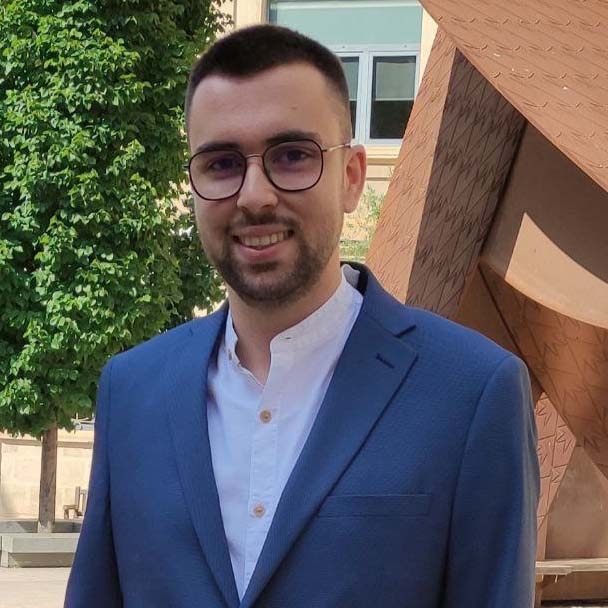
Carlos Aliaga Torró is a researcher at the Universitat Politècnica de València (Alcoi Campus) and a
member of both the VertexLit Research Group and the Valencian Research Institute for Artificial
Intelligence (VRAIN) (http://www.vrain.upv.es). He is currently
pursuing a Ph.D. focused on the
application of Artificial Intelligence in Education.
His research interests include artificial intelligence, education, and human-computer interaction, with
a particular focus on the development of personalized and adaptive learning technologies that consider
the role of the teacher in the loop and ethical aspects.

I am a university professor in Spain and a researcher in Artificial Intelligence, currently focused on logic and its applications. My work has explored topics such as semantic web, agents, logic, and classical AI, and he is also interested in educational and computational thinking approaches (for example, in early childhood education).
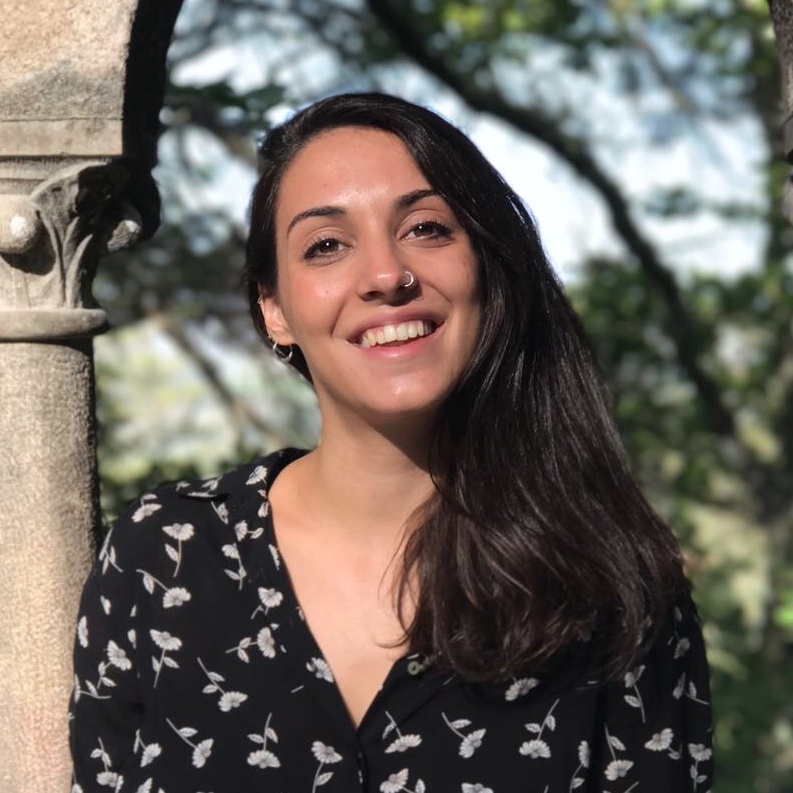
I'm Rosó Baltà Salvador, a researcher and professor at Polytechnic University of Catalonia. I teach in the Product Design Engineering Bachelor's program and the Master of Advanced Studies in Design (MBDesign). My current research explores how artificial intelligence and design intersect, as well as the social aspects of design and education. With a background in UX/UI research and design, I've led digital projects across different industries, focusing on digital transformation and user experience.

Saskia Best is a principal lecturer at the School of Communication, Media and Information Technology of the Rotterdam University of Applied Sciences. She teaches undergraduate courses in Creative Concepting, Cultural Differences and Design and Innovation. She is also responsible for the International Relations within the school.

Hi! I'm Enric Brasó, an industrial design engineer, educator, and researcher working at the intersection of computational design, digital fabrication, and emerging technologies in architecture and industrial design. I have developed and led a range of experimental fabrication projects within maker culture and design innovation communities. I currently teach in the Product Design Engineering programme at UPC, where I combine hands-on prototyping, computational design workflows, and research-led design practice.

Jan is an Assistant Professor and senior lecturer at the Prague University of Economics and Business,
working across applied research and implementation in competitive and technology intelligence, OSINT,
patent analytics, and AI.
He also works with international companies, early-stage startups, and senior leaders. Across these
contexts, the pain points are consistent: unclear questions, missing or noisy data, and information
overload. He turns these into a focused intelligence function that supports real decisions.
His work blends competitive intelligence, OSINT, patent intelligence, and practical AI. He installs
early warning systems, builds weekly signal reviews, and designs queries and dashboards that surface
what matters. For executives, this delivers earlier visibility into market, policy, and competitor
moves. For R&D teams, it enables patent-driven scouting, white-space analysis, and clearer investment
choices. For universities, it provides research intelligence that links funding, publications, and
patents to measurable outcomes.

I'm a visual designer (MA) and educator specializing in Maker Education and Identity at Creative Media & Game Technologies, Rotterdam University of Applied Sciences. My work explores the intersection of making, technology, and human identity. I'm currently conducting design research on how digital avatars and creative processes can foster reflection, empathy, and cultural awareness.
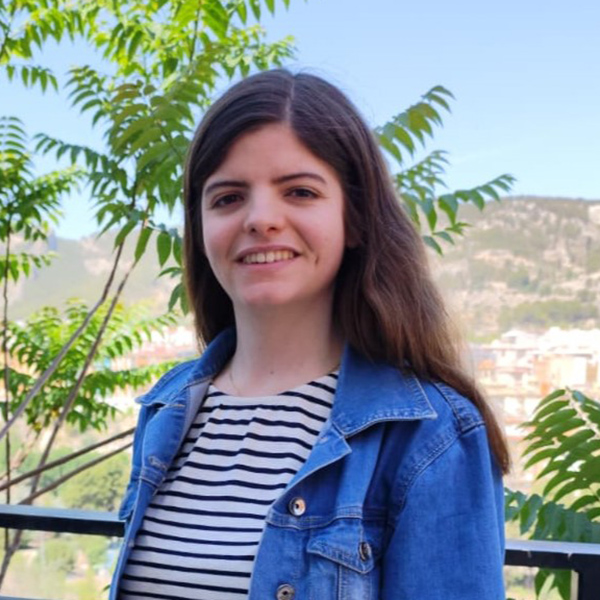
Isabel is a researcher at the Universitat Politècnica de València (Alcoi Campus) and member of the
VertexLit
research group and the Valencian Research Institute for Artificial Intelligence (VRAIN -
http://www.vrain.upv.es). Currently pursuing a Ph.D. focused on
Artificial Intelligence and Augmented
Reality.
Her research interests include artificial intelligence, augmented reality, human-computer interaction,
and the development of assistive technologies for people in the early stages of dependency.

Ignacio Gil is an associate professor at the Universitat Politecnica de Catalunya (UPC), Terrassa, Spain, since 2011. From 2012-2014 he served as Chairperson of the Spanish IEEE EMC Chapter. Since 2012 he is also a collaborator at Universitat Oberta de Catalunya (UOC), Spain. Since 2019 he is Deputy Director of International Relations at ESEIAAT (UPC). He has been involved in 16 research projects (6 as principal researcher) in different research activities including passive and active RF and microwave devices and circuits, metamaterials, EMC and smart textile electronics. Dr. Gil is co-author of more than 150 scientific publications and 18 patents. He has been awarded the Duran Farell de Investigación Tecnológica (2006) and the patent award from SEIKO EPSON Corporation (2010). Dr. Gil has been visiting professor at different Universities: New Jersey Institute of Technology (USA), Aalto University (Finland), Kyoto Institute of Technology (Japan), Loughborough University (UK), Limerick University (Ireland), Shaoxing University (China) and Polytechnic University of Tirana (Albania).

Teacher and coach second and third years program. Speciality in Entrepeneurship, coach on entrepreneurial skills for creative developers. Business model generation & Value proposition design.

Juan Jesús Izquierdo Doménech is an Associate Lecturer in Computer Science at the Universitat Politècnica de València (UPV), affiliated with the Department of Computer Systems and Computation in the Campus of Alcoi. His research and teaching focus on interactive applications, augmented and virtual reality, and artificial intelligence

PhD. in Computer Science and expert in AI and interaction. Head of the research group Vertexlit, part of the Valencian Research Institute for Artificial Intelligence (VRAIN - http://www.upv.vrain.es ) Involved in research and teaching activities in latest fields of AI, generative AI, interaction, and XR
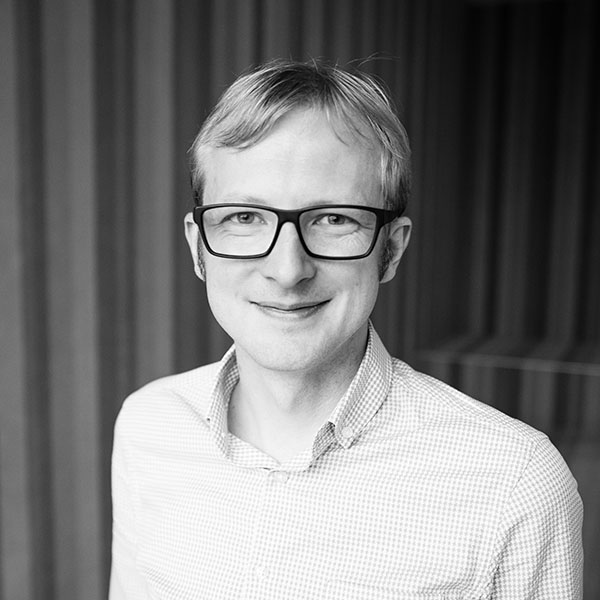
Martin supports data-inspired decisions in commercial and research projects. He has experience in software development and analytics. He has worked as a business analyst and project manager on software projects delivering mainly budgeting and reporting systems for international companies. Recently, he has been working as a business analyst on data and analytics projects. At the Prague University of Economics and Business, he is in charge of data activities and research projects organized in cooperation with the Faculty of Informatics and Statistics. Specifically, he has been part of the team organizing Data & Business activities, and projects to expand business capabilities using IT and analytics. He received the Josef Hlávka Award in 2015 and holds a Ph.D. in Applied Informatics from the Prague University of Economics and Business.

Mireia Puig Poch is a lecturer at the Universitat Politècnica de Catalunya (UPC, ESEIAAT), specialized in ergonomics and human-centered design. Her research examines person-environment interactions with a focus on lower limbs, collaborating with the Diabetic Foot Unit at MútuaTerrassa University Hospital to develop specialized footwear. She has over ten years of teaching experience and coordinates master's-level courses; she publishes on design project methodology and moral responsibility in design engineering.

I'm professor of computer science at Huelva university. My main research area is Artificial Intelligence, Multiagent Systems andwith a PHD in Machine Learning. Gaming is a perfect scenario to develop multi agent strategies. Nowadays games have to show amore sophisticated behavior.

Ulla Schirmbeck is a lecturer at the School of Communication, Media and Information Technology at the Rotterdam University of Applied Sciences. She brings together her expertise as a visual artist and web designer to teach undergraduate courses in visual communication, art-based user research like Urban Sketching and PhotoVoice, and ritual design. In addition, she supervises interns and graduate students, supporting them in creative, culturally-aware design projects.

Kalle is a 36-year-old Product Owner and Technical Artist from Finland with over 10 years of experience in real-time 3D rendering and game engine development. Completed studies in Media Technology at Lahti University of Applied Sciences in 2015 and worked extensively with shader development, VFX systems, and real-time performance optimization. Currently works at Rightware as Product Experience Specialist for their proprietary tool, Kanzi Studio, managing cross-functional teams, product roadmaps, and technical workflows that bridge creative and engineering disciplines. Kalle has worked on implementation of HMIs to automotive clients, such as Toyota, Maserati and Ford

Hi, My name is Jurgen. I am a teacher of English and a coach for individual students and project teams at Creative Media and Game Technologies, in Rotterdam, The Netherlands. I am also in charge of our Internationalisation, and I am trying to combine all these things in my workshop. Added with strange examples, actual bloopers and a bit of humo(u)r;-)

I am the Director of the ESEIAAT (School of Industrial, Aerospace and Audiovisual Engineering of Terrassa) at the Universitat Politècnica de Catalunya (UPC), since March 2025. With over 4,000 students and around 20 bachelor's and master's programs, the school combines strong international engagement, close collaboration with industry, and leading research activity. My background is in industrial design and user-centred processes. I have coordinated a master's program in design, served as Vice-Dean of Students from 2011 to 2021, and was later responsible for quality assurance in teaching programs. I also lead the school's arts initiatives, including a theater group and a choir that connect engineering with creativity and culture.
Sorted by presenter name
Aliaga Torró, Carlos; Ferri Mollá, Isabel; Izquierdo Domenech, Juan Jesús
Discover how Artificial Intelligence is transforming the creation of immersive and interactive virtual experiences. This seminar explores how Generative AI models learn from data to create new content across different modalities, from images and text to 3D assets or textures, that integrate seamlessly into creative workflows. The seminar highlights not only the technical principles behind AI-driven creativity but also its practical applications in redefining the design and development of intelligent, responsive virtual experiences.
Aranda-Corral Gonzalo A.
Artificial Intelligence (AI) has long played a central role in the development of games, serving both as a tool to create more challenging, adaptive, and believable opponents, and as a fertile ground for testing and advancing AI techniques themselves. From classic rule-based systems and search algorithms in chess or Go to modern reinforcement learning agents that learn complex strategies through self-play, games provide a controlled yet rich environment where AI systems must perceive, reason, plan, and act under uncertainty and time constraints. Today, AI is transforming every aspect of game development and player experience through procedural content generation, automated testing, adaptive storytelling, and emotion-driven interaction. This talk will explore how games serve as both a benchmark and a playground for AI research, illustrating how techniques originally developed for games are now finding applications in fields such as robotics, education, and social simulation.
Baltà Salvador, Rosó; Brasó Vives, Enric
In this workshop, we'll explore how design can make the world's issues visible, express our concerns, and build empathy through tangible forms. We'll turn information into experiences that create visual impact and inspire social change. During the session we'll discover how data can become a material for design, shaping products, spaces, and installations that tell meaningful stories. We'll examine how design influences the way we perceive and understand information, and how ethics, empathy, and creativity can come together in the design process. Throughout the workshop, we'll look at real-world examples of data-based installations and interactive experiences that transform information into sensory and visual narratives, and we'll work on the conceptual foundations to create our own proposals.
Best, Saskia; Schirmbeck, Ulla
Join us for a hands-on workshop that explores how digital technologies influence the way we communicate visually across different cultures. We'll look at the opportunities and challenges these tech-mediated spaces create and discuss how to engage ethically, thoughtfully, and inclusively. In this workshop you will critically explore how digital technologies shape visual communication across cultures, and to strengthen their ethical awareness, critical judgment, and communicative effectiveness in intercultural digital contexts.
Černý, Jan
This lecture/workshop explores how intellectual property (IP) rights are the fundamental mechanism for capturing and transforming intangible creativity into tangible value. We will speak about the strategic use of patents, trademarks, and industrial designs as critical tools for innovators, designers, and entrepreneurs in the AI-driven world. The session will focus on how to efficiently mine IP information sources and data not just for protection, but as a catalyst for innovation, sustainable growth, and the successful commercialization of new ideas. By understanding and strategically managing these rights, SMEs can secure their innovations, build resilient brands, and create a competitive advantage in the global market. Participants will also understand the role of organizations related to IP rights, such as the World Intellectual Property Organization (WIPO), the European Union Intellectual Property Office (EUIPO), the European Patent Office (EPO), and others.
Gil, Ignacio
Lecture will cover innovative solutions for e-textile/flexible sensors operating at low and high frequency regimes. The main applications consider body fluids sensing (detection, leakage) such as urine, blood, sweat, including advanced applications (glucose, salinity control). On the other hand, body motion (biomechanics) human variables sensing (such as, breathing, pressure, flexion of the hip joints and limbs) will be addressed. In essence, the lecture addresses the design, implementation and test of a healthcare textile sensor platform naturally integrated into civil/medical outfits, avoiding external electronic sensors, reducing the overall size of medical units and allowing real time monitoring, increasing wearers/patients comfort.
Gil, Ignacio
Lecture will cover innovative solutions for e-textile/flexible sensors operating at low and high frequency regimes. The main applications consider body fluids sensing (detection, leakage) such as urine, blood, sweat, including advanced applications (glucose, salinity control). On the other hand, body motion (biomechanics) human variables sensing (such as, breathing, pressure, flexion of the hip joints and limbs) will be addressed. In essence, the lecture addresses the design, implementation and test of a healthcare textile sensor platform naturally integrated into civil/medical outfits, avoiding external electronic sensors, reducing the overall size of medical units and allowing real time monitoring, increasing wearers/patients comfort.
Hooiring, Roel
Introduction in business model Canvas & value proposition design. Introduction in development based on added value for a specific target audience. Innovation from a different perspective (the job to be done!).
Linares, Jordi
Forget everything you thought you knew about creativity being uniquely human. In this two-hour intellectual
provocation, we'll dismantle the comfortable myth that separates "authentic" human creativity from "mere"
algorithmic generation.
Drawing from neuroscience, machine learning architecture, and creativity research, we'll explore the
uncomfortable truth: your brain's 86 billion neurons and artificial neural networks aren't as fundamentally
different as you'd like to believe. Both learn through pattern recognition, both encode knowledge through
weighted connections, and neither creates from nothing: they recombine, explore, and synthesize from
acquired experience.
It's time to move beyond binary thinking and welcome not just an alternative intelligence, but an
alternative creativity whose boundaries are far more permeable than we imagined. The future isn't human
versus machine, it's about recognizing our shared creative substrate and embracing collaborative creation
between biological and artificial minds.
Potancok, Martin
Data Governance & Data Management
• Data Governance principles, areas of Data Management
• Data Management goals definition in relation with organizational goals and strategy
• Roles in Data Management, data ownership, identification of business requirements on data and their
quality
• Metadata management
Principles and specifics of management of business analytics projects
• Project phases and specifics of data-related projects
Puig-Poch, Mireia; Voltas Aguilar, Jordi
A technology without a compass can be brilliant—and at the same time deeply irresponsible. Ethics in Action:
Inner Development Goals and Cases in Engineering & Design offers an integrated lens: cultivating inner
capacities (self-awareness, critical thinking, courage, empathy, and collaboration) to guide technical
decisions in real contexts across audiovisual engineering, aerospace, and design. It’s not just about
“complying with rules,” but about developing situated moral judgment to anticipate impacts, face
uncertainty, and take responsibility for consequences.
In three hours, we’ll combine a brief activation of the Inner Development Goals with a theoretical framework
of applied ethics and then move quickly to hands-on cases with real dilemmas: algorithmic bias in
audiovisual recommendation systems; security–privacy trade-offs in aerospace settings; and decisions about
sustainability and exclusion in design projects. The goal: to leave with concrete tools to deliberate
better, align criteria as a team, and turn professional practice into responsible practice.
Rodríguez Román, Miguel Ángel
This lecture and interactive demo will focus on two recent projects involving co-creating augmented reality artefacts that convey themes important to communities that have experienced stigma. Drawing on principles of Augusto Boals's activist theatre recast in a digital age, I will share the trauma-sensitive co-design process and the role AI motion capture and augmented reality played in bringing the projects to public audiences. The outcomes create new channels for youth expression while protecting anonymity that bridges art, immersive technology, and youth voice to challenge stereotypes and inspire change in policy and practice.
Schirmbeck, Ulla, Best Saskia
Join us for a visual mapping workshop that helps you explore how place, identity, and cultural values shape the way you see the world. Through collaborative gigamapping, you will chart your own cultural references while comparing them with those of others, revealing overlaps, contrasts, and hidden assumptions. In this workshop, you will uncover how cultural meanings are constructed, identify potential biases, and strengthen your ability to communicate with cultural sensitivity using visual tools.
Wallin, Kalle
Throughout the session, we'll look into the evolution of automotive interfaces and unpack the design decisions that make modern HMIs feel effortless and premium. Discussion will revolve around how safety, usability, and brand expression work in harmony. Along the way, we'll see real-world examples of cluster designs and infotainment system implementations that transform vehicle data into clear, compelling visual experiences. To wrap up, we'll have a brief hands-on moment with Kanzi software, giving you a glimpse of how these concepts translate into practice.
Van Raak, Jurgen
English for Intercultural Communication, and why AI won't save you;-) Even though English is not the first language for many Europeans, English ís commonly used in intercultural situations in Europe and beyond. But what are the standards? Is it British English, or American? And what are the actual differences in vocabulary, pronunciation and/or spelling? And what else can go wrong? This workshop will show you!